

LASER (light amplification by stimulated emission of radiation) technology has historically been associated with science fiction and high tech gadgets. However, advancing technology has given light a new role in noninvasive treatment of various musculoskeletal, nervous system, and skin treatments. Our aim is to illuminate how therapeutic lasers work and when they may be appropriate in your treatment.
How Does Laser Work?
To understand how lasers work, we first take a look at light itself. The light we see is a part of the electromagnetic spectrum, and different light colors are a result of different wavelengths of energy. How the electromagnetic spectrum affects our body depends on the size of the wavelength: the smaller the wavelength, the more powerful the effects it will have on the human body. For example, light has a larger wavelength than ultraviolet (UV) or x-ray radiation, which is why we can be exposed to light without issue but have to limit our UV or x-ray radiation.
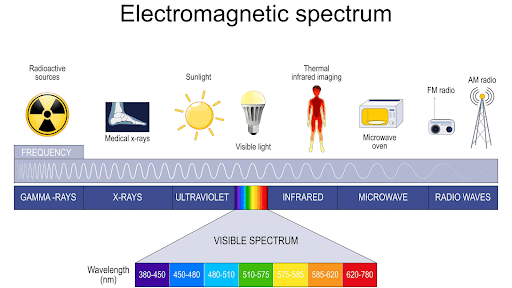
Lasers amplify the energy from visible light of a certain wavelength using particles that act as tiny mirrors, similar to how a telescope uses mirrors to create a picture (Al-Quisi et al., 2023). This allows for a more powerful and concentrated effect that will penetrate past the first layer of skin.
What Does It Do?
The energy from a laser works to stimulate certain structures within a cell. One of the major cell structures that responds well to lasers is the mitochondrion, which is a cell structure responsible for producing ATP, or energy, within your body (Al-Quisi et al., 2023). Increased levels of ATP will allow your cells to complete their normal functions at an increased rate, which can result in faster healing of damaged tissue. In addition, class IV lasers introduce physical heat in addition to light, which can promote blood vessel formation, which promotes increased nutrient availability and “washes” away toxic byproducts from the damaged area (Al-Quisi et al., 2023).
What Conditions Does It Treat?
Laser technology can be used to treat a multitude of musculoskeletal conditions that you might see in a chiropractic office. Cotler et al. (2021) found low level laser therapy (LLLT) to be helpful in treating various conditions including, but not limited to:
- Sprains and strains
- Whiplash injury
- Neck and back pain
- Muscular trigger points
- Nerve pain originating from the cervical or lumbar spine
- Tendinitis and tendinopathy
- Osteoarthritis
- Carpal Tunnel Syndrome
It is important to note that while LLLT can provide some immediate pain relief and decreased inflammation for a few days, it may not completely resolve the underlying cause of these ailments. Laser is often used in conjunction with chiropractic care to provide temporary relief so that a chiropractor can address the muscular imbalance or joint restriction to ensure that the problem resolves completely.
When Laser Might Not Be For You
While the risks of using both LLLT and class IV lasers are fairly low, there are several times where laser therapy may not be the best option for you. In pregnancy, lasers should be avoided over the low back, abdomen (Colter et al., 2015). In addition, laser therapies cannot be performed over tattoos, areas of suspected or active cancerous lesions, or patches of skin where you cannot feel sensations. While eye protection is required for class III and IV lasers, those with epilepsy may be more sensitive to pulsed laser frequencies even with eye protection (Colter et al., 2015). Your chiropractor will always ask you these questions prior to treatment, but letting them know ahead of time can help them choose the best course of action for you.
In addition, while there are many new technologies available for at-home use, be wary of inexpensive items marketed as “lasers” online.
Oftentimes lasers sold online on sites like Amazon or Temu are class I and II lasers, similar to those found in a credit card scanner at the grocery store. These options are not usually strong enough to be therapeutic, and if they are, they require several hours of continuous use to actually elicit a response in the body.
Class III and IV lasers, in conjunction with chiropractic care, can help safely and noninvasively accelerate your healing journey. The next time you have aches and pains in your neck or back, bring the future into the present with laser-based therapies.
References
Al-Quisi, A. F., Jamil, F. A., Abdulhadi, B. N., & Muhsen, S. J. (2023). The reliability of using light therapy compared with LASER in pain reduction of temporomandibular disorders: a randomized controlled trial. BMC oral health, 23(1), 91. https://doi.org/10.1186/s12903-023-02784-8
Cotler, H. B., Chow, R. T., Hamblin, M. R., & Carroll, J. (2015). The Use of Low Level Laser Therapy (LLLT) For Musculoskeletal Pain. MOJ orthopedics & rheumatology, 2(5), 00068. https://doi.org/10.15406/mojor.2015.02.00068
